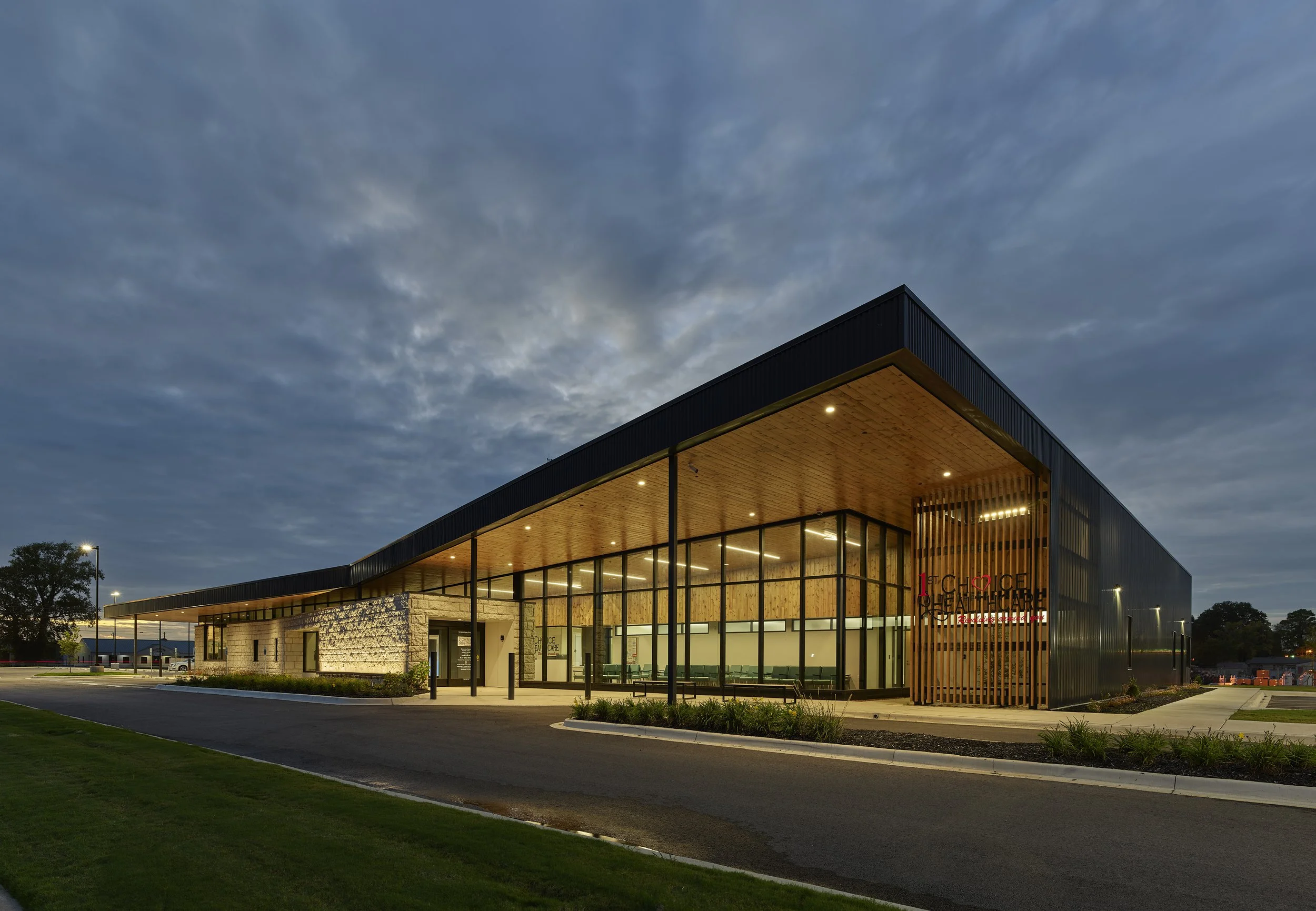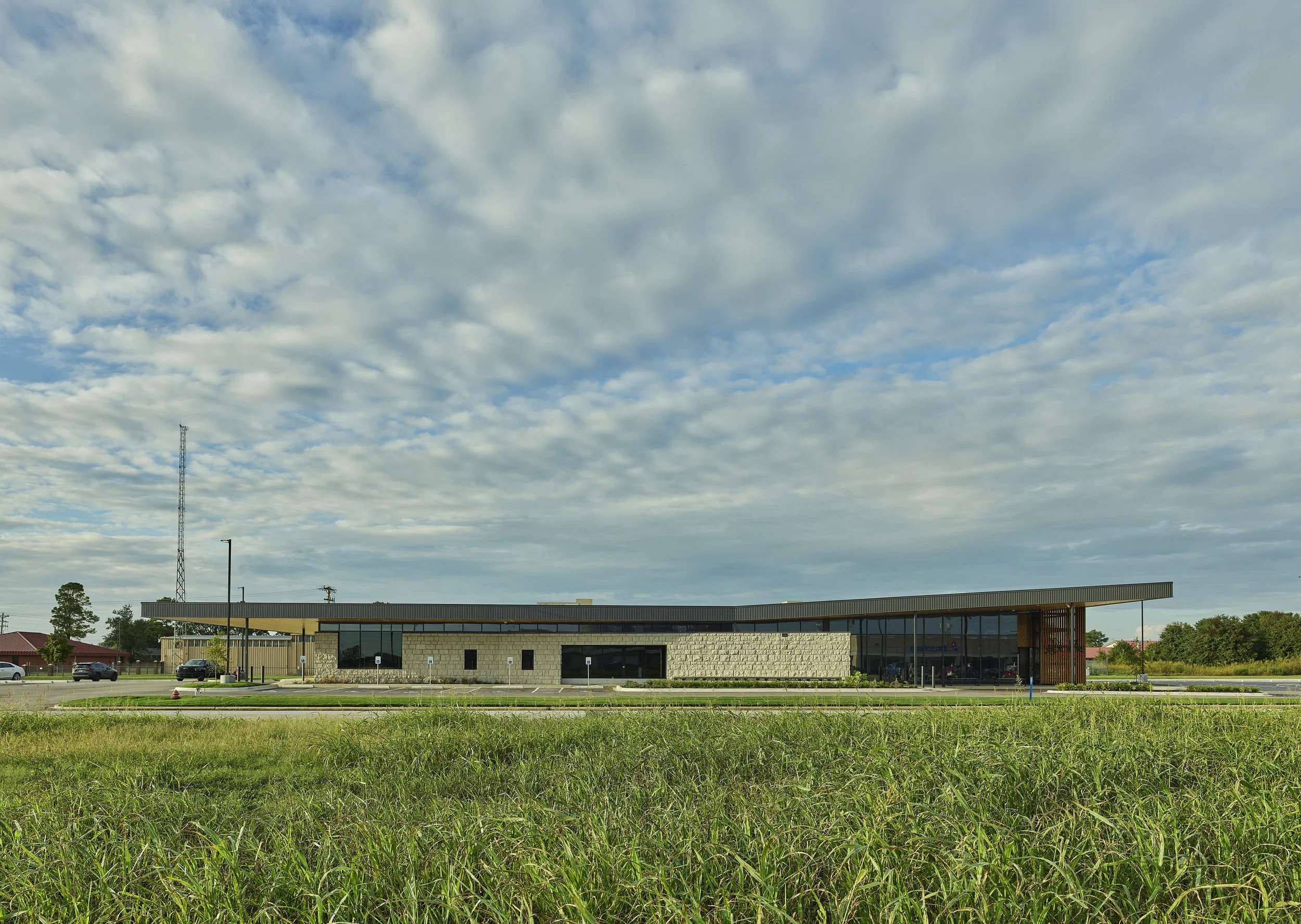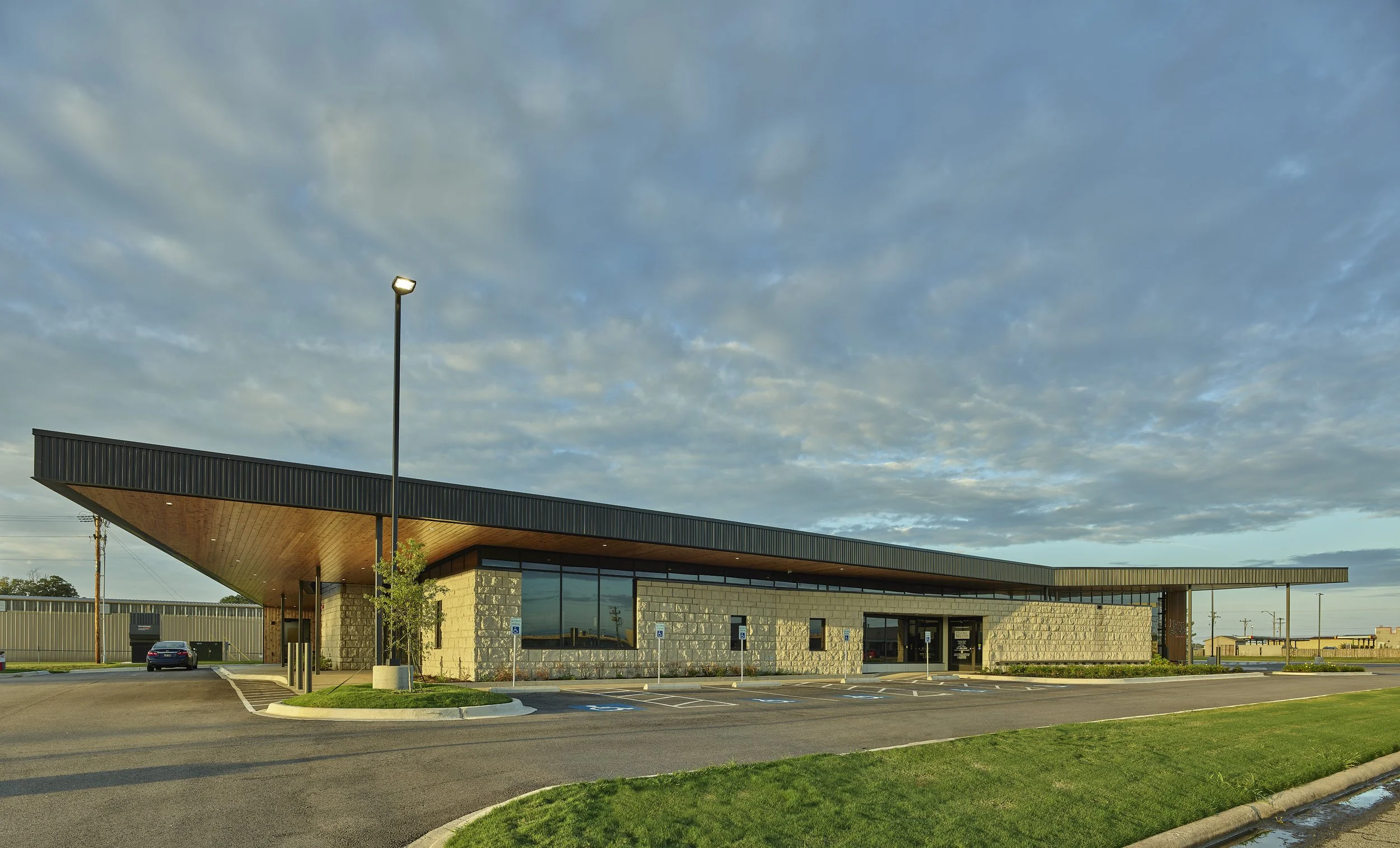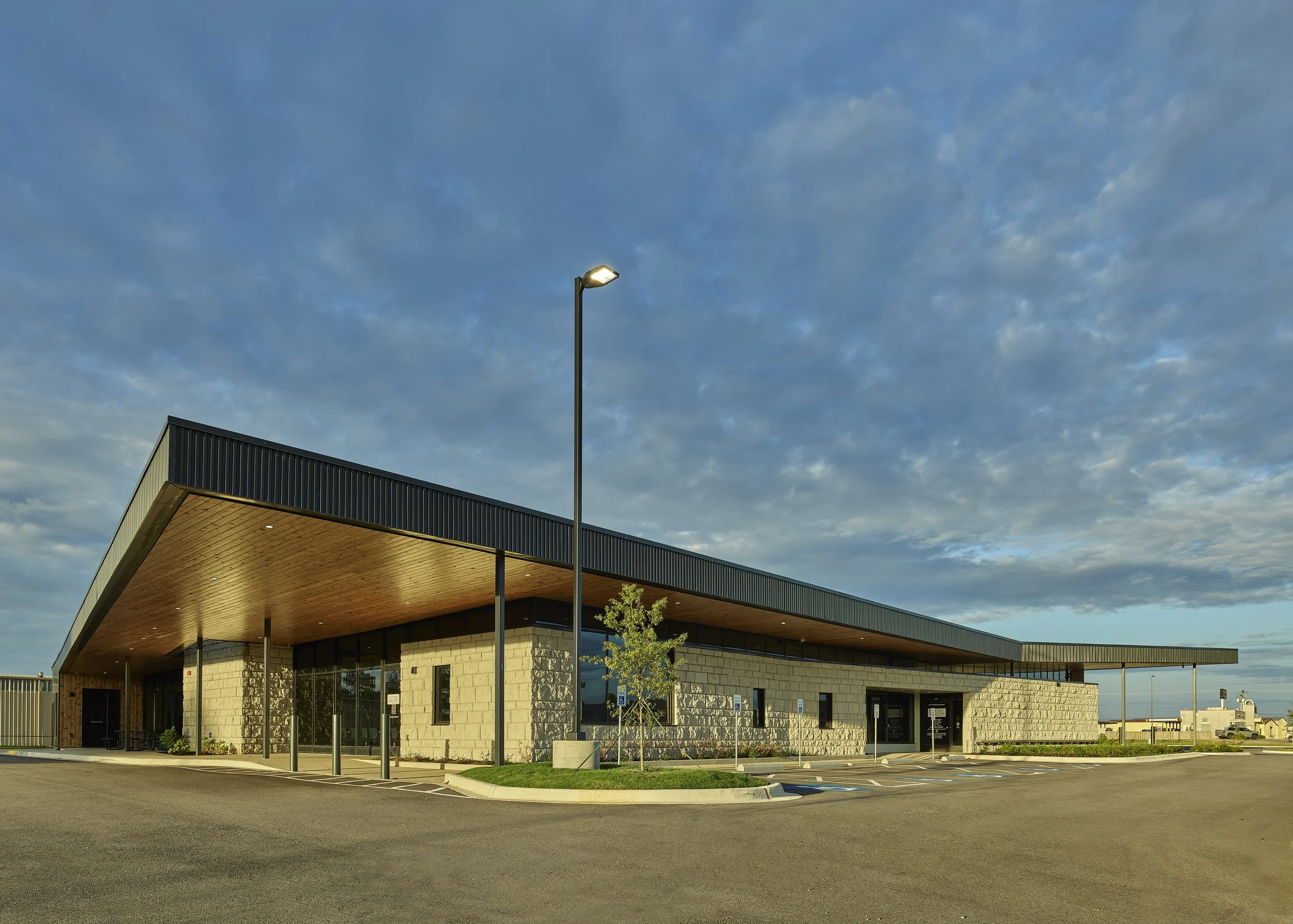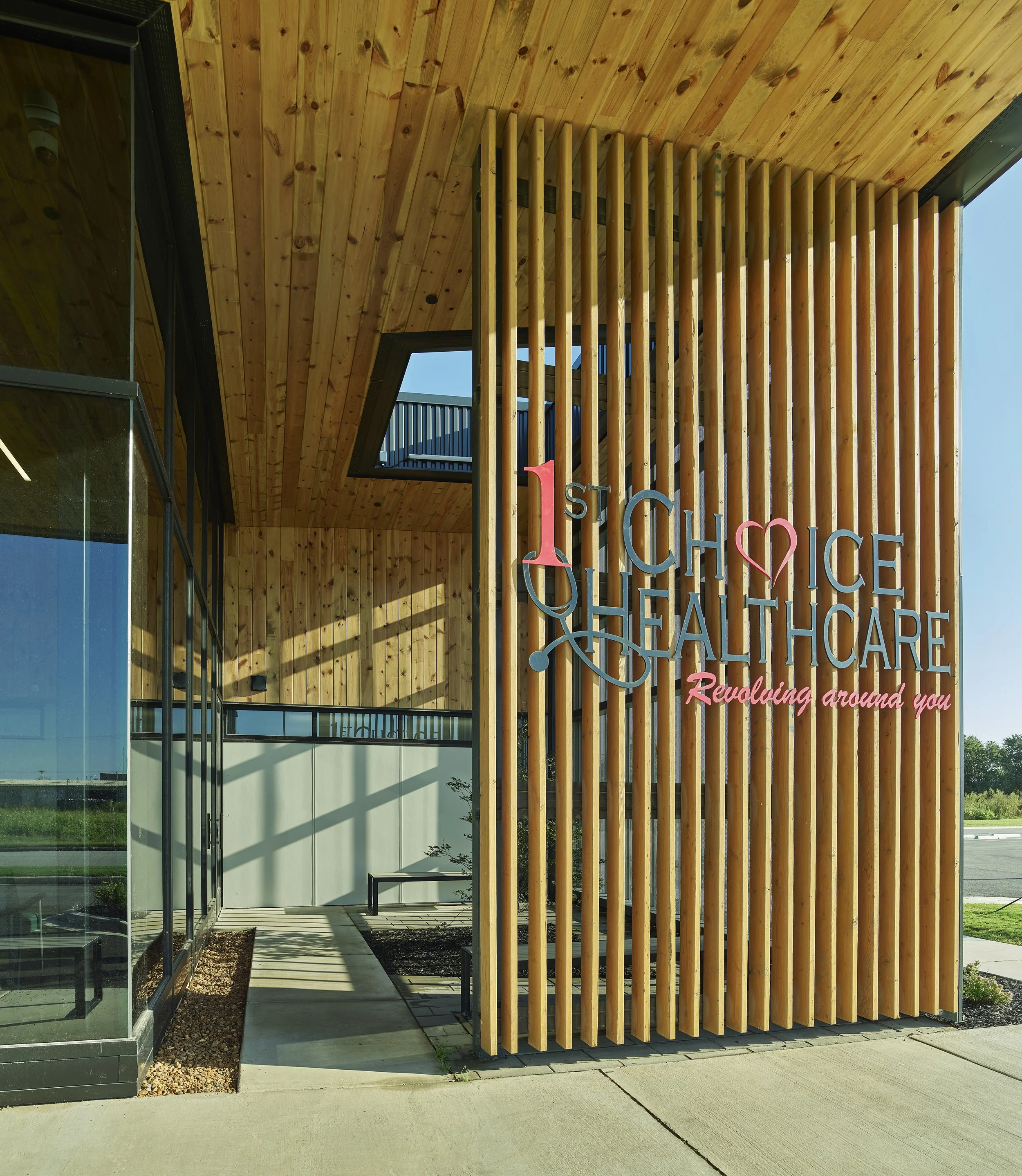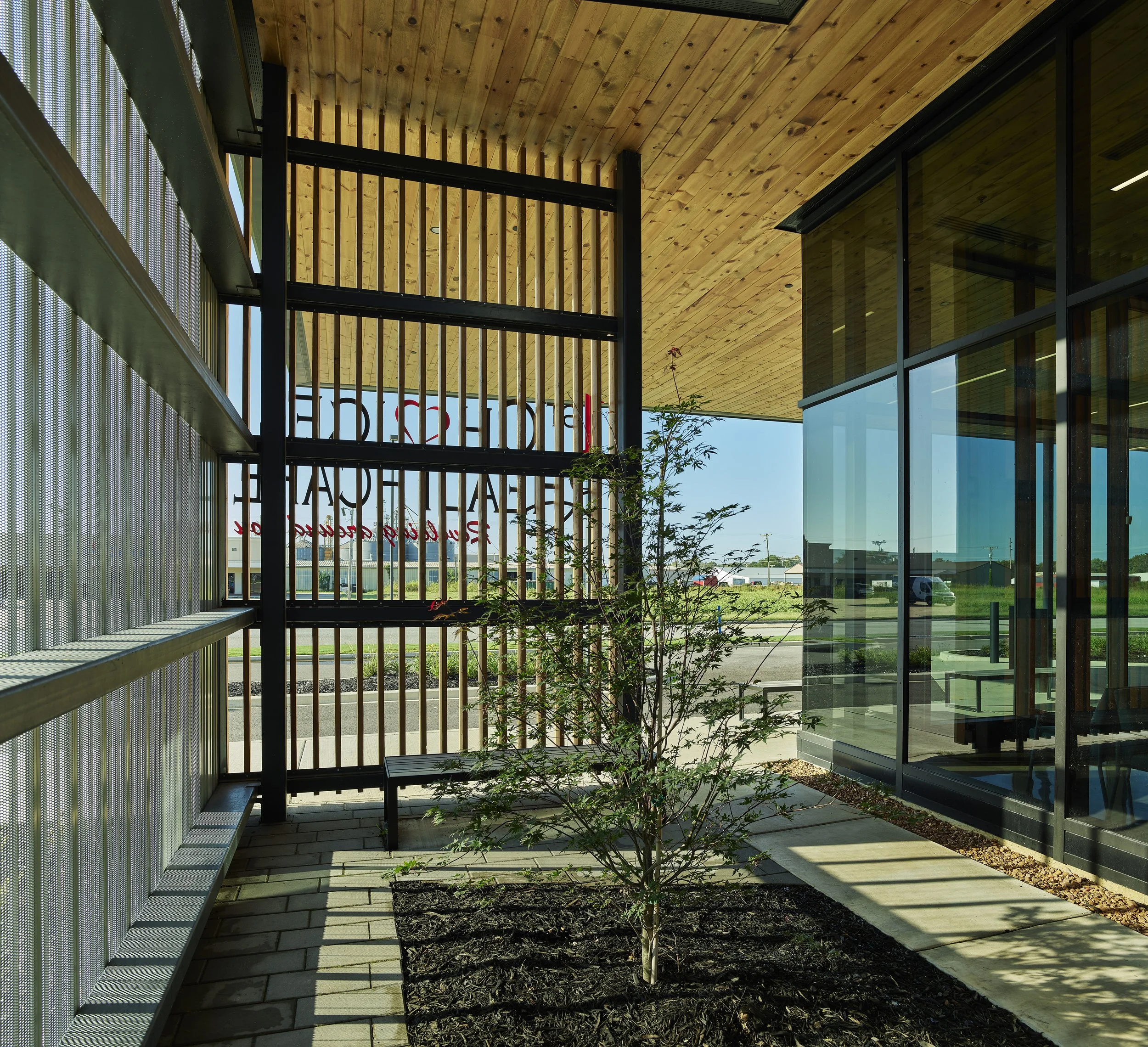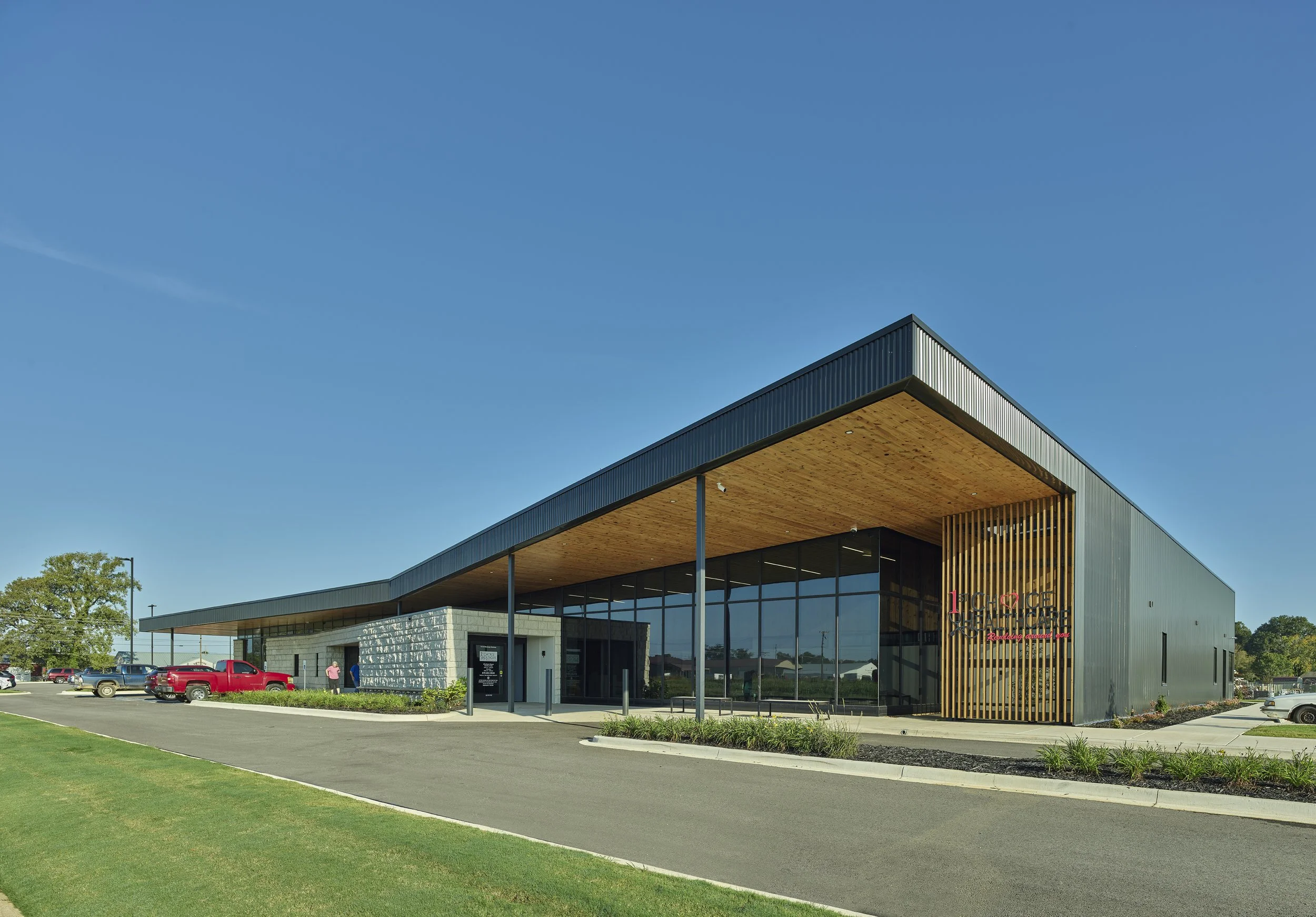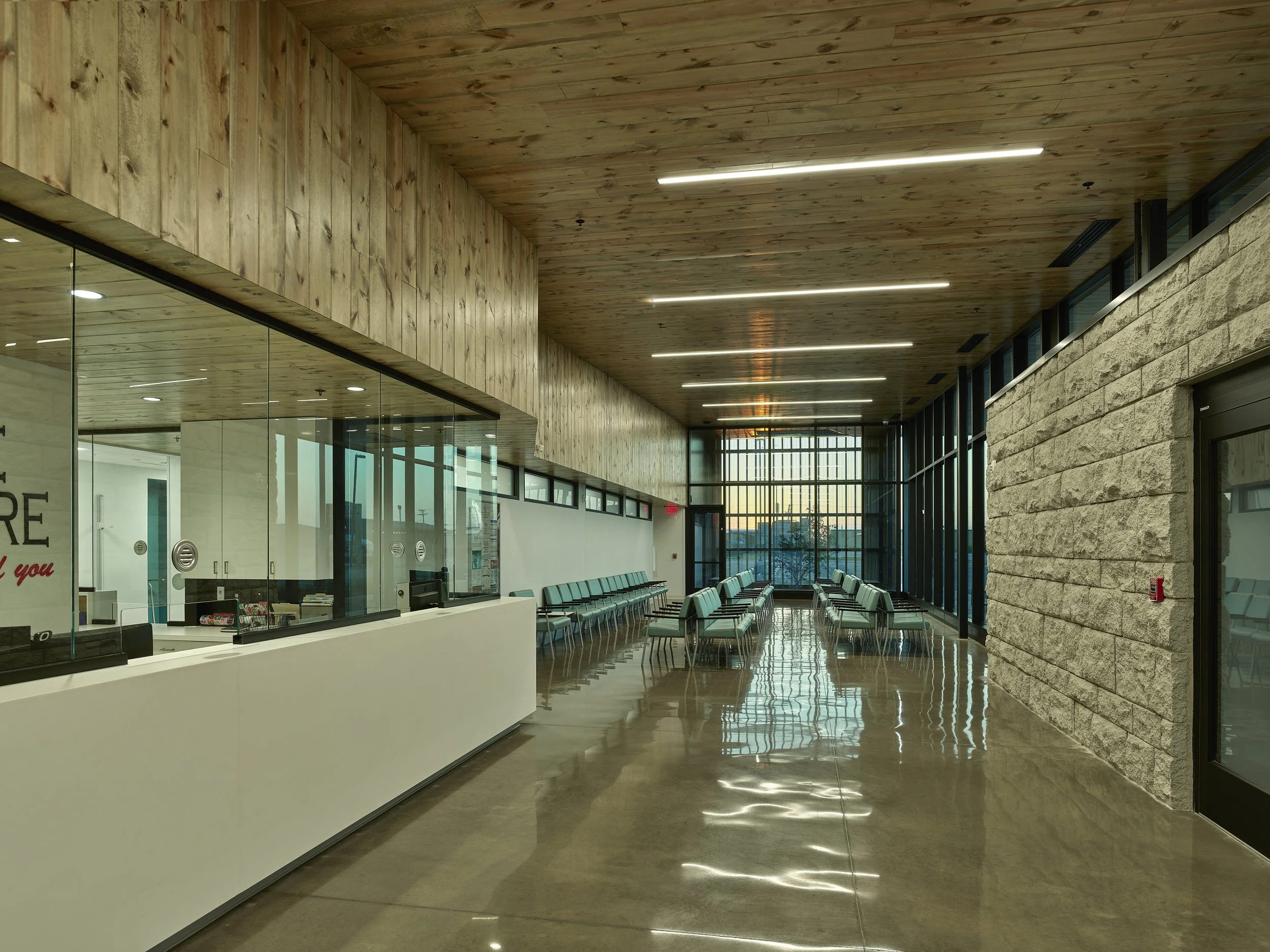
Sited on a four-acre lot along the Black River in Pocahontas, Arkansas, 1st Choice Healthcare is a 17,840-square-foot community health center that reimagines rural healthcare architecture. Developed as a prototype for future clinics, the facility replaces the formulaic, suburban typology of the client’s previous buildings with a spatially rich, materially grounded design that reflects the local landscape, prioritizes patient dignity, and enhances staff efficiency.
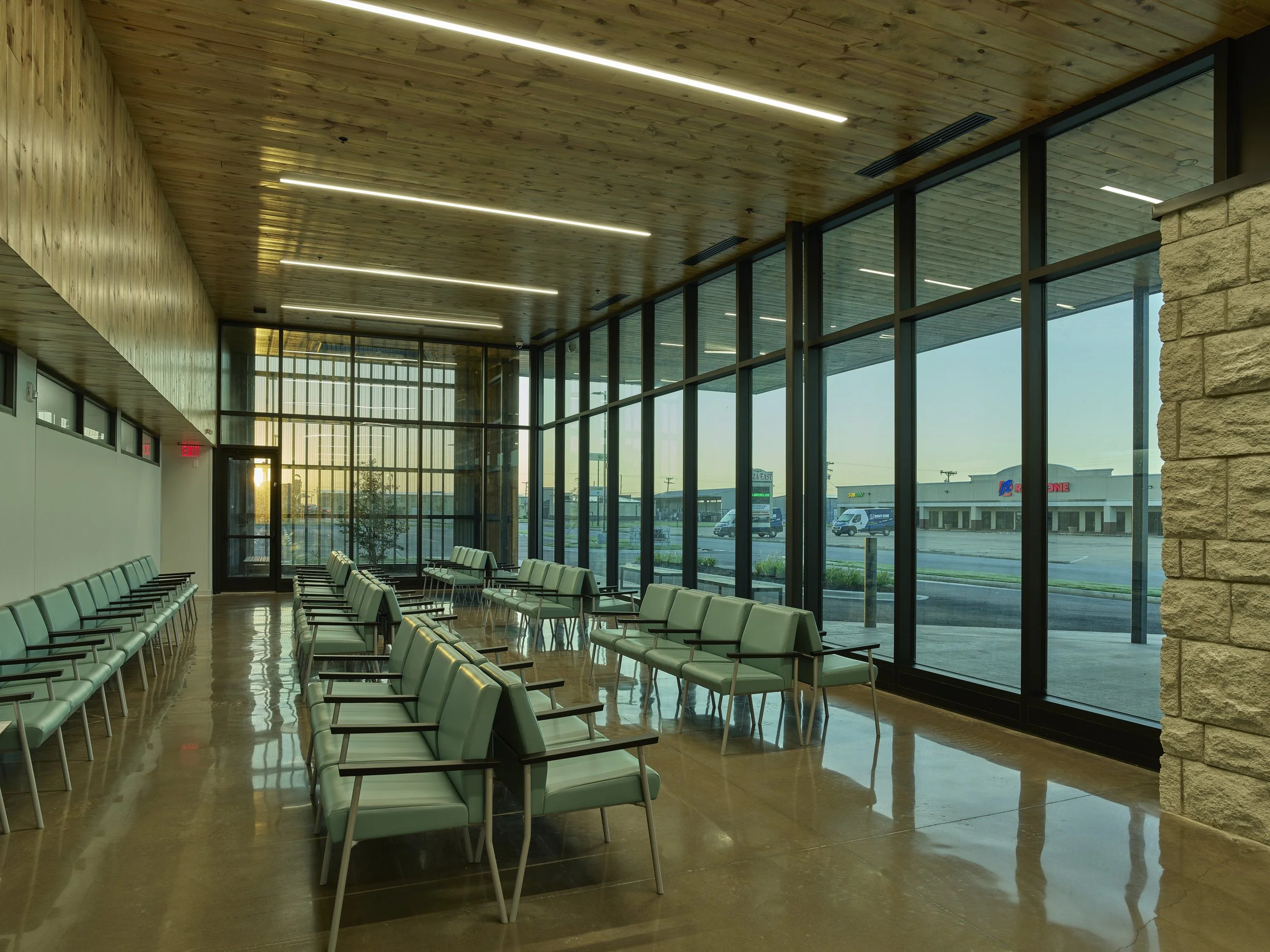
The design responds directly to its site and region—at the geographical intersection of the Ozark foothills and the Mississippi River Delta—through a language of monolithic stone masses, broad overhangs, and warm, daylight-filled interiors. Public spaces thread between stone volumes that conceal service and mechanical areas, offering intuitive wayfinding and moments of calm. Natural light, locally inspired materials, and a restrained palette work together to promote wellness and comfort.
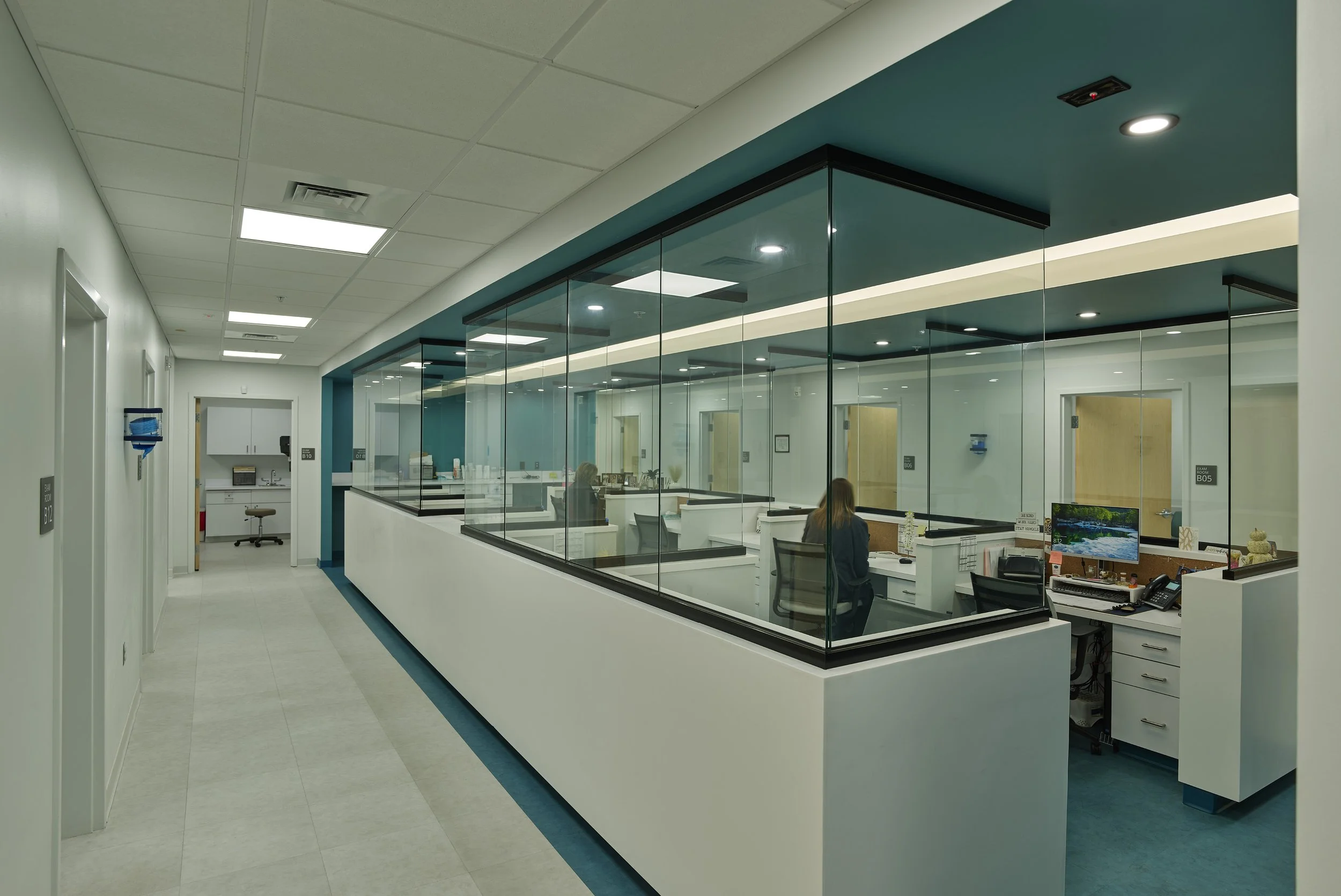
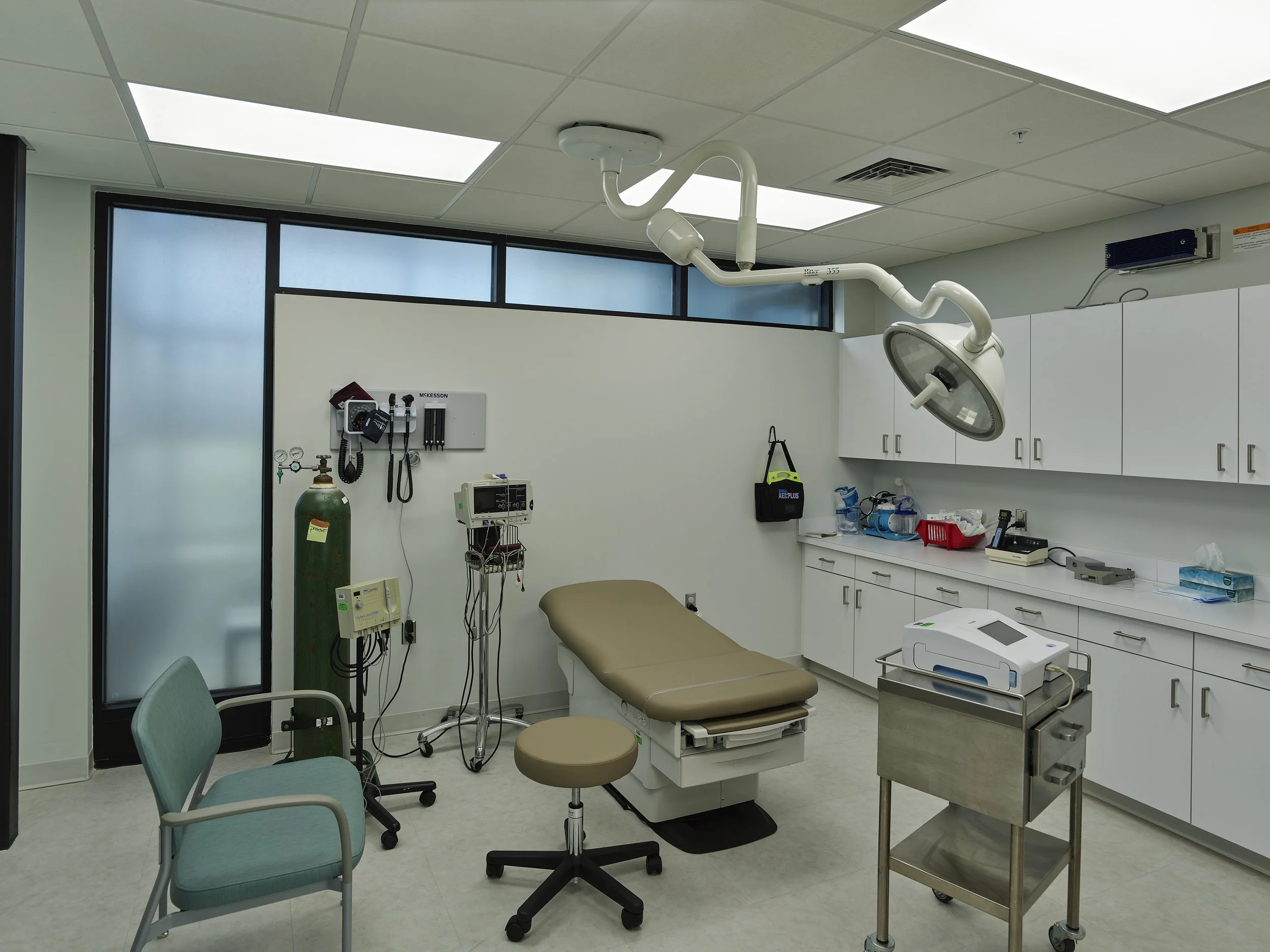
At the heart of the plan is a symmetrical clinical core designed to serve 8 providers, 16 nurses, and support staff with 24 exam rooms. This layout enables dual patient processing and direct lines of sight from staff areas, reducing bottlenecks and improving care delivery. Two covered drive-throughs, developed during the height of the COVID-19 pandemic, support safe, flexible access for testing, triage, and prescription pick-up—strategies that remain useful for future community health needs.
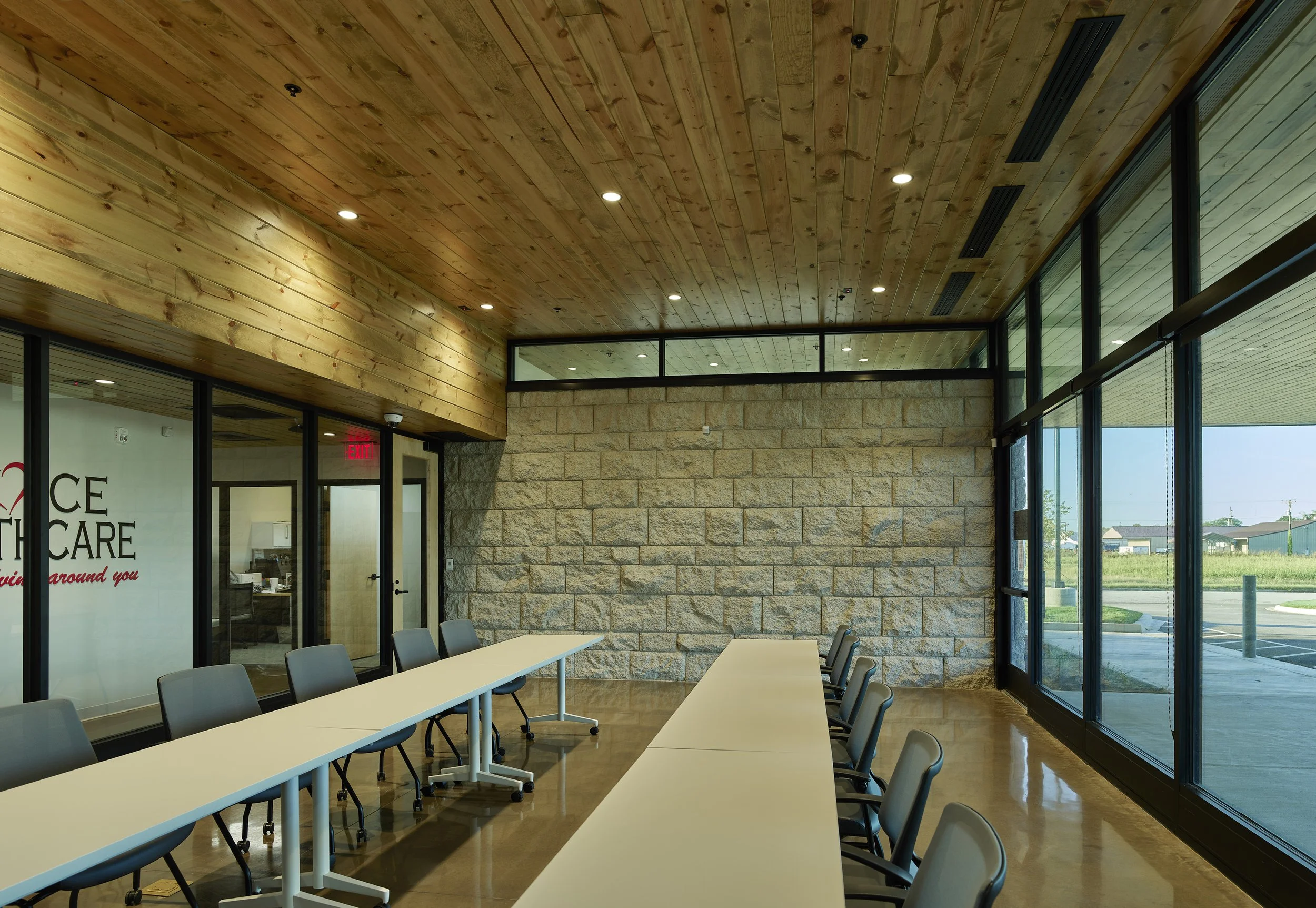
Distinct entries for staff and patients separate public and private circulation, improving flow and security while reinforcing a sense of welcome for visitors. A shared community room anchors the southeast corner of the plan, symbolizing the clinic’s role not only as a provider of care but also as a civic resource.
Rooted in trust and an open client relationship, the design process allowed for meaningful departures from precedent. The result is a facility that centers people—patients, providers, and the broader community—while establishing a replicable model to strengthen rural healthcare infrastructure across the state.